Politics and Hate
A new issue of Psychoanalytic Inquiry, edited by Jeremy Elkins, Ph.D.

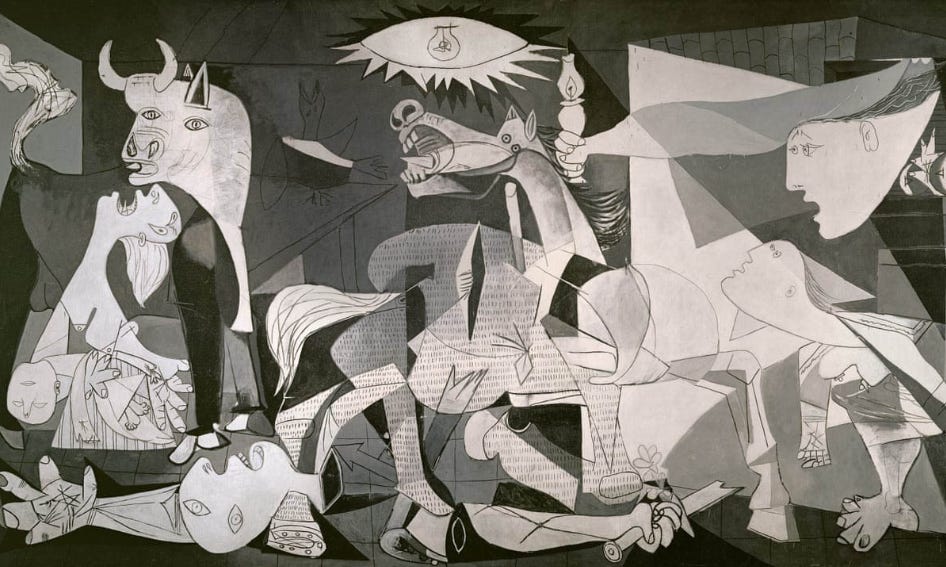
You may see the entire issue here. The following three articles are open-access, free for all. Simply click on the titles below to view:
Hate Speech as the Action of Inequality: Psychoanalytic Reflections on Democracy and Social Power by Jill Gentile Ph.D.
Religion and Exterminatory Fantasies by Benjamin Beit-Hallahmi Ph.D.
and
The Middle East Tragedy: Between Utopia and Dystopia by Emanuel Berman Ph.D.
The following is excerpted from Jeremy Elkin’s prologue:
Several years ago, I attended a psychoanalytic reading group at the home of a fellow analyst. Walking up to the house, I saw on her front lawn what was then a common yard sign, proclaiming “Hate Does Not Live Here.” I found this enormously funny and upon entering the house shared my amusement with the host that she was likely the only psychoanalyst who believed that there was no hate in her house.
The humor (such as it was) stemmed from the juxtaposition of, and displacement between, two referents. There is, on the one side, the familiar political context, the particular forms of hate, that we know prompted these signs. On the other, there is hate as an ordinary and natural fact of psychic life. The displacement from one to the other depends on the acceptance of both. In this way, it is a joke, particularly for psychoanalysts. Within what we might call the dominant strands within our culture, there is no joke to be had (which is, in a way, funny). For we live in a culture that is characterized in part by the prevalence of rabid hate, and in part by the widespread denial of hate as a primary fact of human life. In our clinical work, we are reminded daily of how common is the denial of personal hate and how many are the defenses that are mustered against its acknowledgment. The identification of hate with its more perniciously destructive political forms can easily serve both as an additional defense – by equating hate just with those forms – and an additional motive for resistance by raising the psychic costs of identifying with one’s own hate. The uglier the hate outside, the greater the desire for being hate-free inside. If that is the hate that lives out there, “hate does not live here.”
For psychoanalysts, hate in the abstract is not a problem to be overcome. There are healthy forms of hate, just as there are unhealthy forms of love. The question is not whether hate, but what kind of hate: what is its particular character, what particular functions is it serving, what is its place within an overall psychic structure – and what are its consequences for the quality of the life of which it is a part. For a psychoanalytic volume on politics and hate, the same is true: not whether hate, but of what sort, what functions does it serve and what are its effects. But in this case, these are questions not only of the individual, but of the life of a society.
The distinction between hate as an elemental impulse, its later development, and its political use is developed by Gurmeet Kanwal in his contribution to this volume, “Hate, Politics, India: Three Thoughts and One Conclusion.” Kanwal offers a set of subtle reflections on hate as a primary impulse and on the place of hate in ordinary politics. Building in part on these ideas, he turns to the Indian context, focusing specifically on what, on the surface, is a paradox: a culture in which the idea of enlightenment is central and yet in which group hatred is rampant. In a striking discussion, Kanwal explores both the relationship between enlightenment and hate and the use of the idea of enlightenment in a politics of hate.
Jill Gentile’s paper, “Hate Speech as the Action of Inequality: Psychoanalytic Reflections on Democracy and Social Power,” begins as well with a recognition of the elemental fact of hate and its significance in the early development of the psyche. Building on this, and drawing on her clinical experience, she re-orients the question of how to think about “hate speech.” Moving beyond the simple condemnation of it, she distinguishes various forms of “hateful speech,” their particular functions, and their particular effects within a pluralistic and democratic polity. She suggests that we must attend in every instance to what a particular form of hateful speech is doing, and what the political possibilities are for responding. In a crucial and novel contribution, she insists that we must be equally attentive to the form, the political function, and effect of the hate that may characterize the response.
The intersection of the political/social and clinical is also, although in a different way, the topic of Aisha Abassi’s paper, “Politics in the Consulting Room: Navigating Hate and Meaning in Psychoanalysis.” Abassi focusses on the complexity of ways in which political attitudes – of analyst as well as patient – may appear in the clinical setting, and the complexity, therefore, of the appropriate clinical response. In illustrating the theoretical-technical ideas of the paper, Abassi not only gives us a rich set of clinical vignettes, but one that is especially personal – for in each of the vignettes, her patient’s attitude towards her/fantasies of her as a Pakistani, Muslim woman figures significantly.
As noted already, Kanwal’s paper describes the tragic irony in which the very ideal of enlightenment within Hindu mystical philosophy, and the idea of transcendental unity that is at its core, comes to be used for purposes of violent division, exclusion, suppression. Such tragic ironies are hardly, it is perhaps needless to say, the exception; as Freud taught, it is an irony that is, in fact, endemic within groups and particularly within larger groups. Yet just as the psychology of any individual, however much it touches at every point on the psychological dynamics of the species, must be understood as a unique constellation, so this political dynamic must be understood in its manifold particularities.
Benjamin Beit-Hallahmi takes up precisely this theme in the context of religion. Beginning with Freud’s insight, Beit-Hallahmi argues that extermination of the other, a “cosmic justice [that is] … tied to mass extermination” and the “harmony” and “world peace” that “will follow total destruction” are themes common in most religions, major and minor, fringe and mainstream. Through an unabashed reading of religious texts and prophesies that are often ignored or suppressed, “Religion and Exterminatory Fantasies” maps out the fantasied violence that is a common element in prophetic religious traditions.
Emanuel Berman begins his paper, “The Middle East Tragedy: Between Utopia and Dystopia” on a similar note: an epigraph from a book by the historian Jacob Talmon: “This is the curse on salvationist creeds: to be born of the noblest impulses of man, and to degenerate into weapons of tyranny.” Berman’s (and Talmon’s) focus is not, however, on the politics of religion, “but the religion of politics: the utopia and dystopia of Berman’s title refer not to religious movements per se (however much they are intertwined with religious identifications), but to the emancipatory visions of political nationalism/political sovereignty in the Middle East and the violence to which they have given rise.
In Enrique and Belinda Mandelbaum’s subtle and discerning reflections on modern Brazilian politics, modernity – or the idea of modernity – is itself the site of tragic irony and tensions. Central among these is the tension between the discourse of forging a collective identity – or finding one in a mythical past – and the fact of continuing division, exclusion, and oppression. These tensions give rise to the need for myth and to the violence and hate that those myths both justify and suppress. Modernity, in this account, is not merely the period in which this occurs, but the very discourse through which these contradictory developments are pursued.