Remembering: Contemporary Perspectives
A new issue of Psychoanalytic Inquiry, edited by Daniel Goldin, Psy.D and Daniel Posner, M.D.

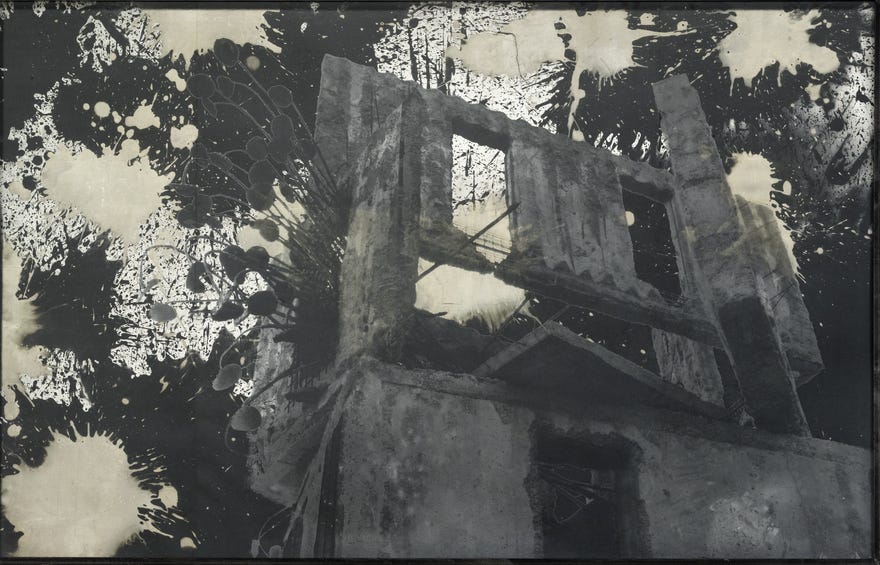
You may see the entire issue here. The following three articles are free for two months. Simply click on the titles below to view:
Remembering as a Means to the Other by Daniel Goldin, Psy.D.
Acts of Remembering: From a Radically Enactive Point of View by Daniel D. Hutto.
and
Dreams, Memories and Trauma – A Search for Transformations in Psychoanalyses by Tamara Fischmann, Ph.D. and Marianne Leuzinger-Bohleber
The following is excerpted from Goldin and Posner’s prologue:
In his first book with Breuer, Freud1 famously wrote, “Hysterics suffer mainly from reminiscences.” Though Freud conceived of memory in non-linear terms, where past and the present mutually influence one another, psychoanalysis has tended to conceive of therapeutic remembering as recollection. Memory is thus something that can be recovered or unearthed, to use Freud’s archaeological metaphor. In his later work, Freud (and most of his contemporary successors) focused on the relationship between the analyst and the analysand in the so-called here-and-now, where the patient’s past could be observed in vivo through the transference or through enactments. A patient’s ruminations about the past were often deemed “extra-transferential.” As an older Freud himself put it:
It cannot be disputed that controlling the phenomena of transference presents the psychoanalyst with the greatest difficulties. But it should not be forgotten that it is precisely they that do us the inestimable service of making the patient’s hidden and forgotten erotic impulses immediate and manifest. For when all is said and done, it is impossible to destroy anyone in absentia or in effigie.2
And yet patients continue to come into our offices wanting to work out happenings in their recent and distant past. They are also increasingly struggling to make sense of what has come to be called “the social,” meaning the ways history and collective memory affect how we see the world, in particular around the legacy of slavery and colonialism.
This issue is an attempt to grapple with the way remembering plays out in a contemporary psychoanalysis. Most of the authors in this issue look at remembering neither in the original Freudian way – as recollection – nor in the later Freudian way – as a transference happening that can be connected to the past through a well-timed interpretation. Rather, remembering is understood in its gerundive form as a mostly relational activity, as something we do together which shapes how we feel and how we move through the world. The body keeps the score. We know that adage well by now. But the score keeps the body too.
Goldin opens our issue with his article “Remembering as a Means to the Other,” which explores the relational sources of remembering. He compares the remembering activities of psychoanalysis with practices of joint reminiscence between mother and child, in which two people come closer in the here and now by sharing an experience of the past. The intertwined imaginations of the two remembering subjects immerse themselves in past experience such that the experience becomes an object of mutual contemplation, provoking often enough a moment of shared recognition which consolidates the memory provisionally as “true.”
The philosopher Hutto’s “Acts of Remembering: From a Radically Enactive Point of View” argues that episodic memory and autobiographical memory are not well-characterized as the encoding and retrieval of information, as they are generally conceived in the cognitivist literature. Rather, he understands remembering as fundamentally enactive – a practice between people who have acquired a culturally mediated narrativizing expertise.
Post-traumatic stress is best understood as an environmentally produced disorder of memory. Collective trauma inflicted on a people or a race produces analogous disorders on the generations that follow. In a paper entitled “The Body Remembers: How history is written in the intrapsyche of the descendants of the enslaved,” Edwards et al argue that the memory of the horrific dehumanizing violence inflicted on enslaved African Americans passes via processes of epigenesis (as well as through trauma-induced dysfunctional family dynamics) into the bodies of millions of present-day African Americans. Edwards and her co-authors stress the need to avoid placing the burden of correcting this trauma-based injury on those already bearing its emotional scars.
Ikkos and Stanghellini’s “Images of the Past” introduces the thinking of the brilliant German Jewish philosopher and social critic Walter Benjamin. They focus on Benjamin’s masterful meditation on childhood and memory entitled “Berlin Childhood around 1900,” explicating in the process Benjamin’s ideas about “long experience” and the “social unconscious.”
In “The Eros Tour,” Adam Blum jumps off from a consideration of Taylor Swift’s concert tour to describe the music-like quality of remembering (as opposed to “receiving” a memory). He writes, “The music we treasure is the music that discloses the world to us that we could not otherwise perceive, that is otherwise just there, inert, noise. And music does this most profoundly during adolescence … The music that accompanies the psyche-somatic eruptions of being a teenager becomes woven into the fabric of our personalities because it restores experience to some form of continuity,” He describes Swift’s concerts (as well as the Spotify “playlist”) as a form of framing, not unlike that of psychoanalysis, a framing that allows paradoxically for the absent-mindedness of free-association – where memory becomes fungible and relational – in contrast to traumatic reexperiencing, in which memory is crystalized, fixed, and simply repeated in different contexts. True remembering, Blum argues, frees us to forget.
In “Salutary reminiscing, pathological nostalagizing and the psychopolitics of Christian nationalism,” Gnaulati brings his fine-tuned analytic mind to bear on a form of collective remembering he describes as “pathological nostaligizing.” Here the past is not something worked out between people in the here-and-now but rather a kind of golden idol erected to be revered, worshiped and consulted as a permanent reference against the evils of contemporary life.
In “Dreams, Memories and Trauma: a Search for Transformation in Psychoanalysis,” Fischmann and Leuzinger-Bohleber revisit the site of Freud’s first profound elaboration of psychoanalytic theory – namely in dreams and their interpretation. Fischmann and Leuzinger-Bohleber draw from the work of Hobson, Friston, Moser, Von Zeppelin and Hortig as well as from their own work employing the Zurich Dream Processing Coding System, to describe dreaming as a form of mnemonic processing around conflictual fixation points. They describe a case in which a patient’s repetitive nightmares gradually grow more relational and adaptive as he proceeds through a psychoanalytic treatment.
As fitting coda to this issue, in “My Analyst has Dementia, I might need a Donut,” Fitzgerald explores experiencing her analyst’s dementia and memory lapses at the end of a ten year analysis. She asks the questions, “What happens to psychoanalytic work when he vault of the analyst’s mind is compromised by dementia.”
Breuer, J., & Freud, S. (1955). Studies on hysteria. In J. Strachey (Ed. & Trans.), The standard edition of the complete psychological works of Sigmund Freud (Vol. 2, pp. 1–335). Hogarth Press. (Original work published 1895).
Freud, S. (1912). The dynamics of transference. In J. Strachey (Ed. & Trans.), The standard edition of the complete psychological works of Sigmund Freud (Vol. 12, pp. 97–108). Hogarth Press. (Original work published 1912), p. 108.
I rolled my eyes at the second title mentioned about “radical enactivism of remembering” when I both read the title and then the article summary, only to find a beauty in it when I bothered to look up enactivism:
natural cognitive systems engage in transformational interactions
I’ve read much lately about top-down vs bottom-up processes and this serves as another reminder that, from what i can tell, just like it’s nature and nurture, so too is it top-down and bottom-up
and how about the ineluctable mystery that the inverse of top-down is not down-top… any etymological etiologists out there are welcome to expLatin why : )
I rolled my eyes at the second title mentioned about “radical enactivism of remembering” when I both read the title and then the article summary, only to find a beauty in it when I bothered to look up enactivism:
natural cognitive systems engage in transformational interactions
I’ve read much lately about top-down vs bottom-up processes and this serves as another reminder that, from what i can tell, just like it’s nature and nurture, so too is it top-down and bottom-up
and how about the ineluctable mystery that the inverse of top-down is not down-top… any etymological etiologists out there are welcome to expLatin why : )
So excited to see this issue on the topic of Remembering. The editorial attention to the relational aspects of remembering seem especially important. In my work with Complex-PTSD, dissociation, and developing the capacity to re-member, I am struck time and again by how much the role of bystanders (including therapists in the apres-coup) impact what is able to be remembered, and how meaning is made of what is remembered.